“Traffic Jam” at Ranthambore Safari Goes Viral, Internet Reacts as Tiger Struggles for Space
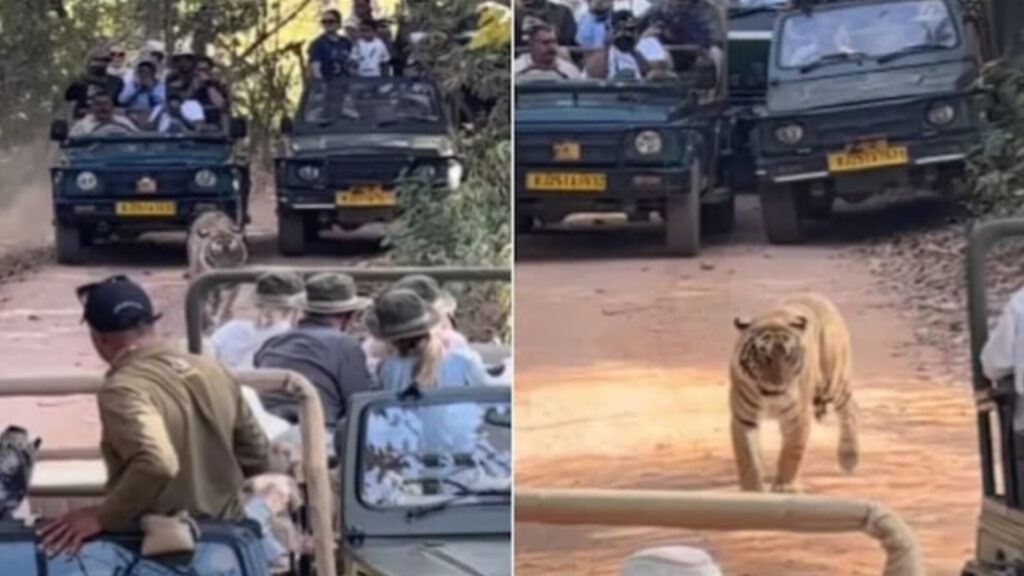
“Traffic Jam” at Ranthambore Safari Goes Viral, Internet Reacts as Tiger Struggles for Space
Alarming visuals from a well-known wildlife destination have sparked widespread concern online after a viral video showed a tiger trapped amid a cluster of safari vehicles, leaving it with barely any space to move. The clip, shared by Instagram user Monty Bhatt, captures a tense moment where the animal appears visibly uncomfortable as tourists crowd around, eager to capture photographs.
Inthe footage, several jeeps can be seen converging on the tiger’s path, effectively blocking its movement. Visitors — both Indian and international — are seen clicking pictures while the tiger stands still, seemingly stressed by the overwhelming human presence. The caption accompanying the video pointed out how the vehicles failed to give the animal adequate space despite its close proximity.
Wildlife experts have raised red flags over such incidents, warning that situations like these can elevate stress levels in animals. Increased cortisol levels, they say, may lead to defensive or aggressive behavior, posing risks not only to the animal but also to humans nearby.

The video quickly gained traction on social media, drawing over 72,000 views and more than 46,000 likes. It also sparked heated discussions in the comments section, with many users criticizing the lack of regulation and discipline during safaris.
One user remarked that the tiger appeared “more civilised and mature” compared to the behavior of the people surrounding it. Another comment, tinged with sarcasm, highlighted the irony of calling such chaotic scenes “efficient management,” likening the situation to a traffic jam in the tiger’s own habitat.
Criticism grew sharper as others pointed out specific details from the video — from tourists using mobile phones excessively to jeeps positioning themselves in ways that prioritized photography over the animal’s comfort. One commenter expressed frustration over how some visitors blocked the view for others, while even noting a foreign tourist casually eating fruit during the sighting, seemingly indifferent to the moment.
Addressing similar situations in the past, Dr. P. M. Dhakate, Chief Conservator of Forests, has emphasized that such “safari jams” interfere with the natural movement of wildlife. According to him, repeated disturbances can have lasting impacts on an animal’s health, behavior, and even its ability to reproduce.
Growing backlash from the public has reignited calls for stricter enforcement of wildlife tourism guidelines. Many are urging authorities to implement tighter controls to ensure that animals are not subjected to unnecessary stress in their own environment.