Update for Small Savings Investors: Decision on PPF, NSC, SCSS Interest Rates For January–March 2026 Announced

Update for Small Savings Investors: Decision on PPF, NSC, SCSS Interest Rates For January–March 2026 Announced
Small savings investors get relief as government holds interest rates steady for the seventh quarter in a row
The Union government has decided to keep interest rates on popular post office small savings schemes unchanged for the January–March 2026 quarter, offering stability to millions of savers amid falling bank deposit rates. The decision was announced on December 31, 2025, following the quarterly review by the Ministry of Finance.
Key schemes such as the Public Provident Fund (PPF), National Savings Certificate (NSC), Senior Citizen Savings Scheme (SCSS), and Sukanya Samriddhi Yojana (SSY) will continue to offer the same returns as the previous quarter. This marks the seventh consecutive quarter with no change in rates, with the last revision having taken place in April 2024.

Under the latest notification, PPF will continue to earn interest at 7.1 per cent per annum. SCSS and SSY remain among the highest-yielding government-backed savings instruments, both offering 8.2 per cent interest. The NSC rate stays at 7.7 per cent, while Kisan Vikas Patra continues to offer 7.5 per cent, with maturity in 115 months.

Other schemes have also been left untouched. The Post Office Monthly Income Scheme (MIS) will keep earning 7.4 per cent annually, providing steady cash flow for retirees and conservative investors. Post Office Savings Accounts will continue to pay 4 per cent interest, while time deposits will offer rates ranging from 6.7 per cent to 7.5 per cent, depending on tenure.
Small Savings. Steady Returns. Explore India Post Small Savings Schemes for Jan–Mar 2026, including SSY, SCSS, NSC, PPF, and more.
— India Post (@IndiaPostOffice) January 2, 2026
Secure, trusted, and designed for every stage of life.
Invest with India Post today.
Visit https://t.co/U3fl0P2s7x to know more.#IndiaPost… pic.twitter.com/41HXyIFuRH
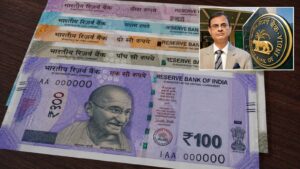
The decision comes despite several indicators pointing towards a possible rate cut. The 10-year government securities (G-Sec) yield has softened, and inflation has remained relatively low. In addition, the Reserve Bank of India has reduced the repo rate by a cumulative 125 basis points during 2025, prompting banks to lower fixed deposit rates across maturities.
However, the government appears to have consciously chosen stability over alignment with market-linked benchmarks. For a large section of the population particularly retirees, senior citizens, and households in small towns and rural areas, small savings schemes remain the primary avenue for safe and predictable returns. Any reduction in rates would have directly impacted their monthly income and long-term financial security.

Officials note that many pensioners and senior citizens depend heavily on SCSS and MIS for regular income. A rate cut at this stage could have significantly reduced their earnings at a time when healthcare and living costs continue to rise.
By holding rates steady, the government has also avoided widening the gap between bank deposit returns and small savings schemes, a concern that has surfaced repeatedly in past rate cycles. The move ensures that post office schemes remain competitive, especially as banks continue to recalibrate their fixed deposit offerings downward.
For investors, the unchanged rates offer clarity and continuity. Those relying on these instruments for capital protection and steady returns can continue their investments without the need for immediate portfolio adjustments.

While the government reviews these rates every quarter, the consistent stance over the past year suggests that any future changes are likely to be gradual rather than abrupt, keeping the interests of small savers at the forefront.
Disclaimer: This article is for informational purposes only and does not constitute financial advice. Readers should consult a qualified financial advisor before making investment decisions.