What Your Sleep Position Quietly Reveals About You — And What It Means for Your Body

Sleeping Girl on the bed. on light background
We spend nearly a third of our lives asleep, yet most of us never question how we sleep. Whether you curl up like a cocoon or stretch out like a relaxed starfish, your favourite sleep position isn’t just a habit, it can reflect subtle aspects of your personality and offer clues about your physical well-being.
Researchers say our bodies instinctively choose positions that mirror our emotional patterns, coping styles and comfort needs. Here’s a fresh look at what your nightly posture may be saying about you.
1. The Protective Dreamer (Fetal)
This curled-up posture, like a foetus, knees tucked in, body slightly rounded — is one of the most common worldwide.
What it suggests about you:
People who naturally sleep this way often carry a soft heart beneath a tough exterior. They are empathetic, warm, and intuitive, but also like emotional security and familiarity. Sensitivity and resilience go hand in hand for them.

What it means for your body:
The gentle curve can soothe the lower back, but over-curling may tighten the neck and shoulders. Using a pillow between the knees brings better spinal balance.
2. The Composed Socialiser (Log)
This side-sleeping stance keeps the body straight and arms aligned neatly along the torso, like a log.
Personality echo:
Log sleepers tend to be easy-going, open to people, and comfortable blending into groups. They trust easily and prefer harmony over conflict.
Body implications:
It naturally supports the spine, but firm mattresses may create pressure around the hips—extra cushioning helps.
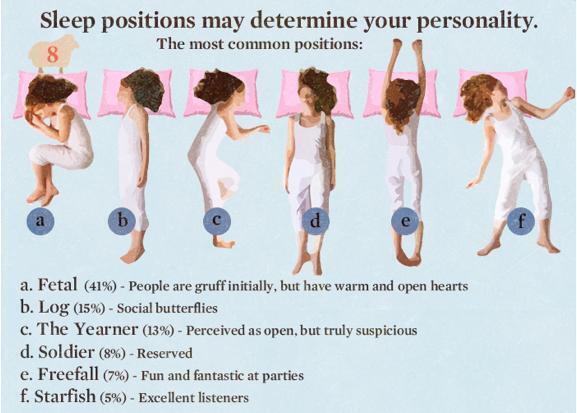
3. The Thoughtful Pursuer (Yearner)
Here, the sleeper lies on one side, arms stretching forward as if reaching out.
Inner traits:
These individuals are curious and receptive to new ideas but prefer to act after careful thought. Once they commit, they rarely waver.
Physical influence:
This posture allows smooth breathing and digestion, though arm strain is common. Hugging a pillow can take the pressure off.
4. The Quietly Determined (Soldier)
Lying flat on the back with arms by the sides is a minimalist, disciplined pose.
Personality layer:
Back sleepers in this style often like order—structured routines, clear boundaries and calm environments. They tend to be dependable and observant.
Health notes:
It’s great for spinal alignment but can worsen snoring or sleep-apnea tendencies. A supportive pillow is essential.
5. The Open-Hearted Helper (Starfish)
Arms spread upward or outward, legs relaxed… this posture signals total ease.
What it may reveal:
Starfish sleepers are often generous listeners, emotionally available and supportive. They like giving more than receiving.
Body aspect:
Although the spine lies naturally, the open throat angle can amplify snoring. Slightly elevating the head helps.
6. The Bold Extrovert (Freefall)
Face-down sleepers — arms around the pillow, head angled to the side — show a dramatic sleep personality.
Personality hint:
Energetic, spontaneous and outwardly confident, but surprisingly sensitive beneath the surface. Criticism hits them harder than they admit.
Physical caution:
This is the posture most likely to strain the neck and lower back. A slim pillow reduces twist.
Your sleep position isn’t destiny but it can be a subtle window into how your mind and body seek comfort. Whether you’re a curled-up dreamer or a sprawling optimist, knowing what your posture says can help you improve rest, reduce strain, and understand your own needs a little better.
Disclaimer: The information in this article is intended for general awareness and should not be interpreted as medical or psychological advice. Sleep positions may reflect comfort preferences rather than definitive indicators of personality or health. If you experience persistent pain, sleep disturbances or health concerns, please consult a qualified healthcare professional.