Why We Celebrate Annakut After Diwali and Offer a Mountain of Food to Lord Krishna
Why We Celebrate Annakut After Diwali and Offer a Mountain of Food to Lord Krishna
Govardhan Puja, celebrated a day after Diwali, marks one of the most beautiful and meaningful festivals in Hindu tradition. It’s a day to thank nature and remember Lord Krishna’s act of protecting the people of Vrindavan. Also known as Annakut, which means “mountain of food,” the festival celebrates abundance, gratitude, and humility.
The Story Behind Govardhan Puja
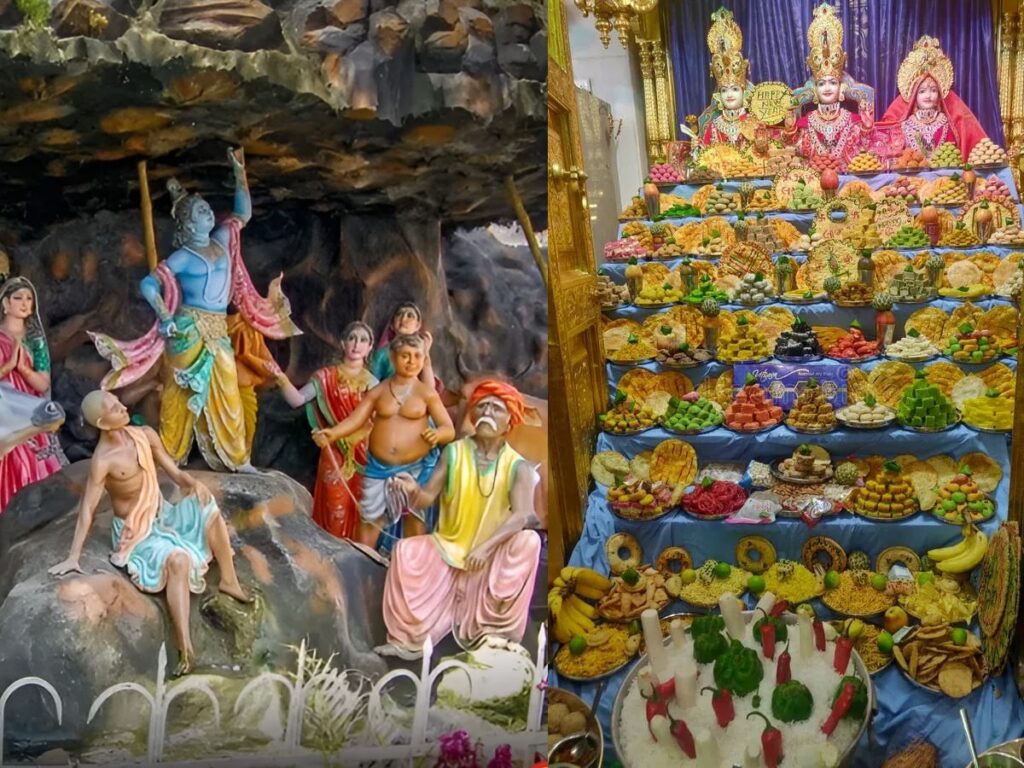
According to Hindu mythology, the people of Vrindavan used to worship Lord Indra, the God of Rain, believing he blessed them with crops and prosperity. However, young Lord Krishna taught them an important lesson, that they should instead honor Govardhan Hill, the real source of their nourishment and safety.

Krishna explained that the hill provided fertile land, green grass for cows, and clean water. The villagers listened to him and stopped their annual worship of Indra. Angered by this, Indra sent heavy rains and thunder to punish them.
To save everyone, Krishna lifted the entire Govardhan Hill on his little finger and used it as a giant umbrella to shelter the people and animals of Vrindavan from the storm. For seven days and nights, he held the hill steady until Indra realized his mistake and asked for forgiveness. This divine act showed that faith, humility, and gratitude are far more powerful than pride.
When and How Govardhan Puja Is Celebrated in 2025
This year, Govardhan Puja will be celebrated on Wednesday, October 22, 2025.
According to Drik Panchang, the auspicious timings are as follows:
- Govardhan Puja Pratahkala Muhurat: 5:03 AM to 7:38 AM
- Govardhan Puja Sayankala Muhurat: 3:24 PM to 5:59 PM
- Pratipada Tithi Begins: 10:24 PM on October 21, 2025
People across India observe this festival in temples and homes, offering prayers and food to Lord
Krishna and Govardhan Hill.
The Meaning of Annakut
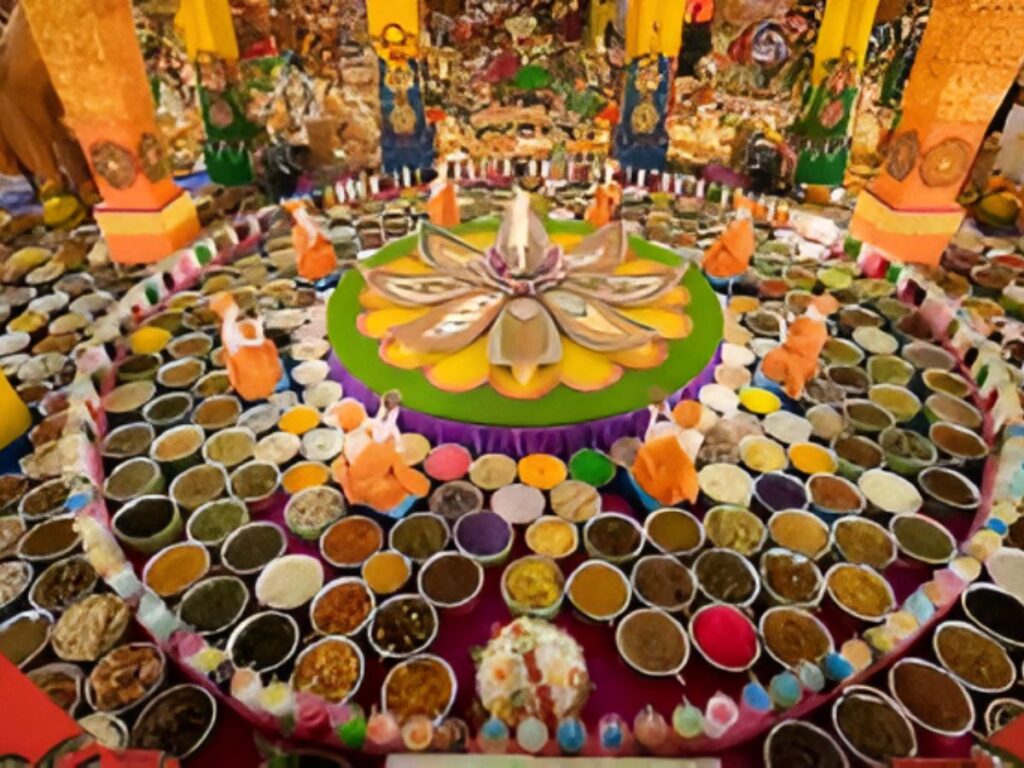
The highlight of Govardhan Puja is the Annakut, which means “mountain of food.” Devotees prepare a large variety of vegetarian dishes and arrange them like a hill to represent Govardhan Hill. This offering is made to thank Lord Krishna for his protection and to honor nature’s abundance.
The Annakut often includes over 56 food items, known as chappan bhog, symbolizing richness and gratitude. These foods are later shared as prasad, reminding everyone to value sharing and community spirit.
Rituals and Traditions
The festival begins with making small replicas of Govardhan Hill using soil, cow dung, or food. These are decorated with flowers, miniature cows, and colorful ornaments. Devotees then perform parikrama (circumambulation) around the hill, sing devotional songs, and light diyas to honor Lord Krishna’s love and kindness.
Prayers are offered not just to Krishna but also to cows and nature, which are considered sacred and essential to life. After the rituals, families and communities come together to enjoy the Annakut prasad, a feast that spreads joy, love, and togetherness.
The Significance of Govardhan Puja
Govardhan Puja is more than just a religious event, it’s a reminder to stay humble and thankful. It teaches that real power lies not in pride but in kindness and respect for nature. Through this celebration, devotees express their gratitude for food, shelter, and the natural world that supports life.
Even after the lights of Diwali fade, Govardhan Puja continues the spirit of devotion and unity. The story of Lord Krishna lifting the hill reminds us to lift others in times of need and protect what truly sustains us, love, nature, and faith.