10-Minute House Help Apps Gain Ground In Urban India; Can They Replace The Traditional Maid?
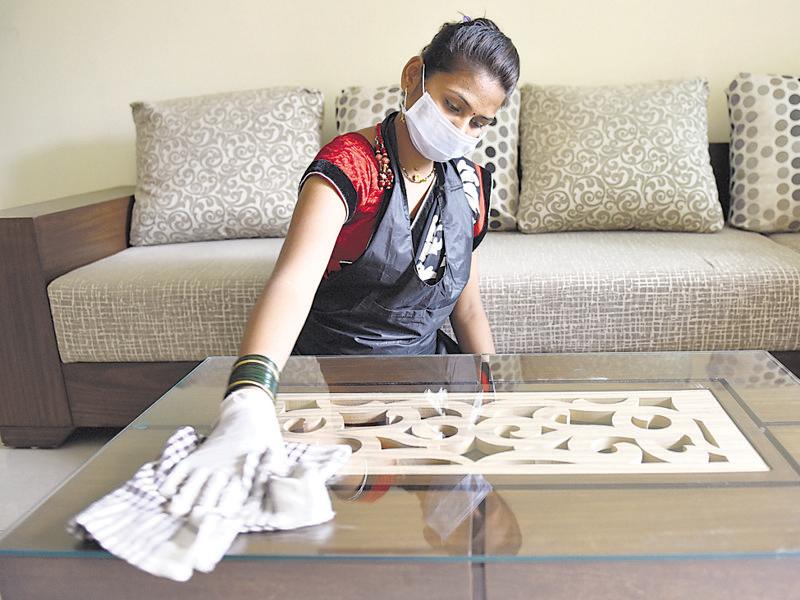
10-Minute House Help Apps Gain Ground In Urban India; Can They Replace The Traditional Maid?
From ₹100-an-hour bookings to fixed-salary gig workers, instant domestic help platforms scale up across metros
Urban India’s appetite for convenience has found a new outlet: 10-minute house help apps. After food delivery, groceries and salon services, startups are now promising trained domestic workers at customers’ doorsteps within minutes.
Platforms such as Snabbit, Pronto, Urban Company’s InstaHelp and Broomies are expanding rapidly across Delhi-NCR, Mumbai, Bengaluru and Pune. What began as a trial for emergency cleaning or last-minute help is steadily becoming part of routine urban living.

The process is simple. Users download an app, select the required service from dishwashing and laundry folding to post-party clean-ups, choose the number of hours and confirm the booking. Pricing has been one of the biggest attractions. On Urban Company, customers can avail an hour of service for around ₹100. Snabbit offers packages such as ₹149 for three one-hour visits, bringing the effective hourly rate to roughly ₹50 during promotional phases.
Growth numbers reflect rising demand. Snabbit reportedly grew from one lakh monthly orders in August to three lakh in October and is nearing 8.5 lakh orders in February. Urban Company’s InstaHelp, launched in March 2025, crossed 50,000 daily bookings on February 22. In the October–December quarter alone, InstaHelp clocked 1.6 million orders, averaging over five lakh bookings per month.
On the supply side, these startups operate through networks of gig workers, largely women, who undergo background verification and basic training before receiving job requests through mobile apps. Unlike traditional gig models, some platforms offer fixed salaries. Workers on Snabbit, for instance, can earn between ₹20,000 and ₹30,000 per month for full-day shifts, with income assured regardless of daily job allocation.
Flexible models are also available. Workers can opt for shorter two-hour shifts with lower fixed pay, around ₹10,000, and earn incentives by accepting additional jobs. An SOS feature is built into apps to address safety concerns, allowing workers to raise alerts or complaints if issues arise at client homes.
For many service professionals, the arrangement offers greater flexibility compared to traditional domestic work. Instead of adhering to rigid early-morning schedules, workers can choose time slots and manage household responsibilities before logging into the platform.
However, the financial sustainability of ultra-low pricing remains a question. Urban Company disclosed that InstaHelp posted an adjusted EBITDA loss of ₹44 crore in a recent quarter, citing investments in onboarding, training and early earnings support. Analysts note that heavy discounts are driving early adoption, but long-term profitability will depend on balancing pricing, worker payouts and customer retention.
Consultants tracking the segment say that, for now, instant help apps are functioning as a supplementary layer rather than a complete replacement for full-time domestic staff. Many households use the services when their regular maid is unavailable or during special occasions.
As urban lifestyles become increasingly time-bound, the 10-minute house help model appears to be carving out space in India’s growing gig economy. Whether it evolves into a sustainable alternative to the traditional bai system or remains a convenience-driven add-on will depend on demand, pricing stability and platform economics in the coming years.
Disclaimer: Article for informational purpose only. Rates are indicative may vary and be subject to change.