Supreme Court Declines Plea For Mandatory Menstrual Leave, Cites Risk To Women’s Employment
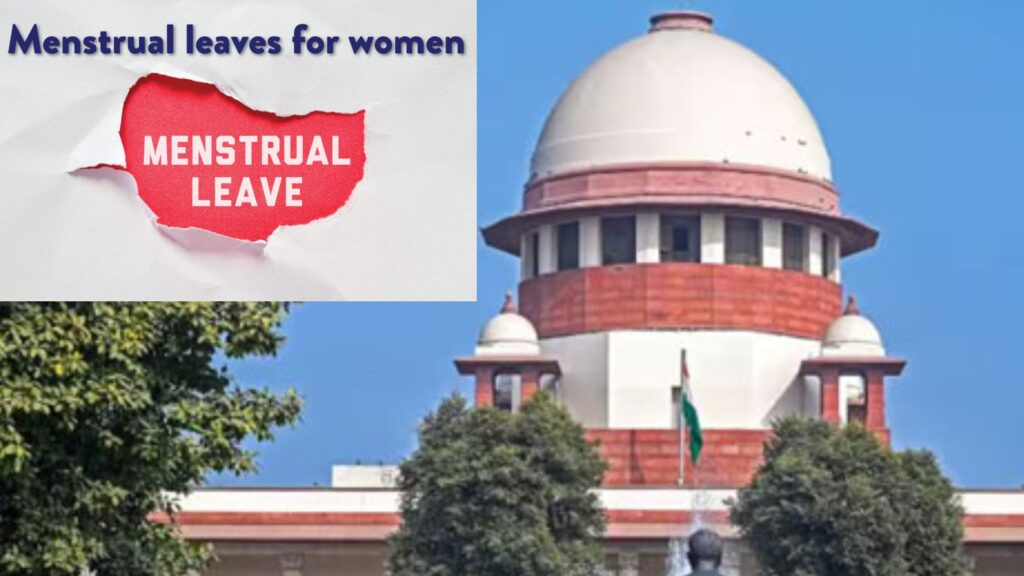
Supreme Court Declines Plea For Mandatory Menstrual Leave, Cites Risk To Women’s Employment
New Delhi, March 13, 2026: The Supreme Court of India on Friday refused to entertain a plea seeking a law that would make menstrual leave compulsory for women, with the bench cautioning that such a mandate could unintentionally harm women’s employment prospects.
During the hearing, Chief Justice Surya Kant remarked that if menstrual leave were made legally mandatory, some employers might become reluctant to hire women. According to him, the measure could create a perception that women require special treatment in the workplace, which might negatively influence hiring decisions.
The petition was filed by lawyer Shailendra Mani Tripathi, who requested that the court direct states to introduce policies allowing women—both students and working professionals—to take leave during menstruation.

While discussing the issue, the Chief Justice noted that increasing awareness about menstrual health and encouraging supportive workplace practices is important. However, he warned that turning such provisions into a compulsory legal requirement could lead to unintended consequences, including discrimination in recruitment.
Senior advocate MR Shamshad pointed out that certain institutions have already introduced menstrual leave on their own. For example, the government of Kerala had earlier allowed menstrual leave for female students in state-run universities under the leadership of Chief Minister Pinarayi Vijayan. Some private companies have also adopted similar policies voluntarily.
Responding to this, the Chief Justice emphasised that voluntary measures are different from a legally binding rule. He suggested that making menstrual leave mandatory through legislation could discourage employers from offering opportunities to women.
Earlier this year, the Supreme Court of India had delivered a significant judgment recognising menstrual hygiene as an essential aspect of the fundamental rights of girls and women. In that ruling, a bench of Justice JB Pardiwala and Justice R Mahadevan stated that governments have a responsibility under Article 21 of the Constitution to protect women’s health and dignity.
The court also directed authorities to improve menstrual health facilities by ensuring the availability of free sanitary products, separate functional toilets for girls and women, and awareness campaigns in educational institutions.