Portable AC vs Tower Air Cooler: 7 Real Differences You Should Know Before Buying
Portable AC vs Tower Air Cooler: 7 Real Differences You Should Know Before Buying
When the heat starts interfering with your sleep, your work, and honestly your mood, the hunt for a practical cooling solution becomes urgent. Not everyone wants a permanent installation or the expense of a full-fledged air conditioner, which is why portable options are getting so much attention right now. But when it comes down to choosing between a portable AC and a tower air cooler, the decision isn’t always straightforward.
Both promise relief, both are easy to move around, and both come with their own compromises. So instead of quick comparisons, let’s break this down in a way that actually helps you decide what fits your space, budget, and expectations.

1. Cooling Experience Feels Completely Different

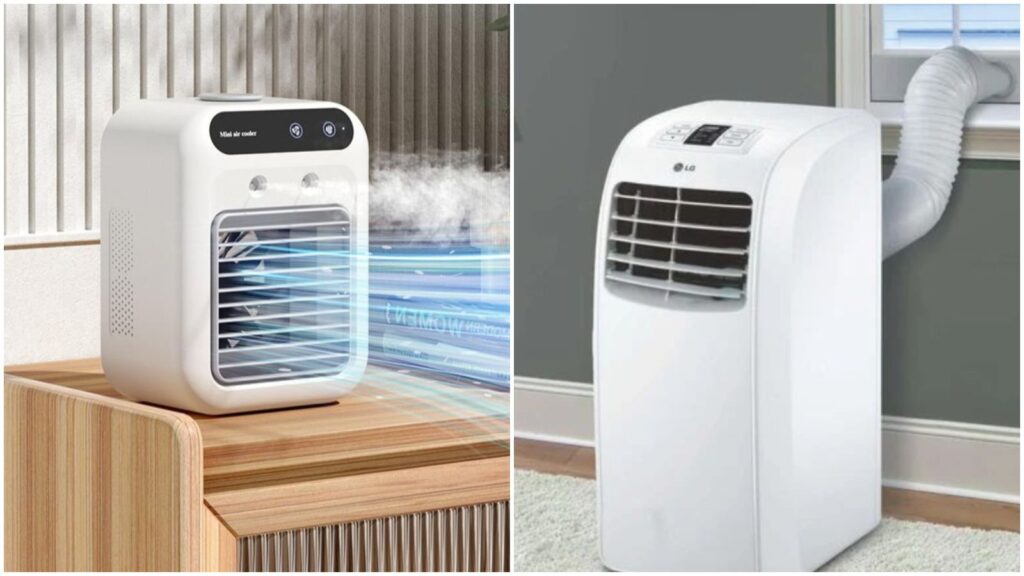
The biggest difference lies in how these two devices cool a room. A tower air cooler works by pushing air through water-soaked pads, sending out a stream of cooler air. This airflow feels refreshing, especially when you’re sitting right in front of it, but it doesn’t lower the overall room temperature significantly. In larger rooms, or if you’re moving around, the cooling can feel uneven.
A portable AC, on the other hand, functions much like a traditional air conditioner. It uses a compressor and refrigerant to actually reduce the temperature of the entire room. That means consistent cooling no matter where you’re sitting. However, it does require an exhaust pipe to push hot air outside, so you’ll need access to a window or a proper outlet for setup.
2. Room Size Compatibility Matters More Than You Think
Tower air coolers are better suited for small to medium-sized rooms where you’re usually stationary—like a study corner or a small bedroom. They struggle to maintain comfort in larger spaces or rooms with a lot of heat buildup.
Portable ACs are far more effective in bigger rooms. Since they actively cool the air rather than just circulate it, they can handle higher temperatures and larger areas much more efficiently.
3. Humidity Can Change Everything
One factor many people overlook is humidity. Air coolers depend on water evaporation, which works best in dry climates. In cities with high humidity—like coastal areas such as Mumbai or Kochi—their effectiveness drops noticeably. Instead of cooling, they can sometimes make the air feel heavier.
Portable ACs don’t have this problem. They remove heat and even reduce humidity levels, making them a much better option in sticky weather conditions.
4. Electricity Bills Tell a Different Story
This is where the balance starts to shift. Tower air coolers are extremely energy-efficient. Because they rely on simple blowers and pumps, they consume much less electricity. For most households, this translates to an increase of roughly ₹200 to ₹350 per month.
Portable ACs, however, operate similarly to split or window AC units. Their higher power consumption means your electricity bill could increase anywhere between ₹1,500 and ₹2,500 per month depending on usage. Over time, this becomes a significant cost factor.
5. Upfront Cost Is a Big Deciding Factor
Price plays a major role in most buying decisions. Tower air coolers are far more budget-friendly, typically ranging between ₹6,000 and ₹14,000 depending on the brand and capacity.
Portable ACs sit in a completely different price bracket, starting around ₹25,000 and going up to ₹35,000 or more. At that point, many buyers begin to consider whether investing in a fixed split or window AC might be a smarter long-term choice.
6. Installation and Setup Differences
One of the reasons people consider portable ACs is the assumption that they require no installation—but that’s only partially true. While you don’t need permanent mounting, you do need to manage the exhaust duct properly, which means setting it up near a window or creating a vent.
Tower air coolers are simpler in comparison. Just fill the water tank, plug them in, and they’re ready to go. No additional setup, no modifications to your space.
7. Maintenance and Daily Use
Air coolers need regular refilling of water and occasional cleaning of cooling pads to keep them functioning well. They’re simple machines, but they do need consistent upkeep during heavy usage.
Portable ACs require less frequent attention in terms of daily use but may need periodic servicing, similar to any air conditioner, to maintain performance over time.
Choosing between a portable AC and a tower air cooler really comes down to what you value more—powerful cooling or affordability and efficiency. If your priority is strong, consistent cooling regardless of room size or humidity, a portable AC is clearly the better performer. But if you’re looking for a cost-effective, low-power solution for a smaller space, a tower air cooler makes far more practical sense.
In many cases, people end up choosing coolers not because they’re better, but because they strike the right balance between comfort and cost. And sometimes, that balance is exactly what you need.
Note: Actual performance, electricity usage, and cooling efficiency may vary depending on room size, insulation, climate conditions, and individual usage patterns.