Vaibhav Suryavanshi’s IPL Journey Sparks ‘Child Labour’ Debate; What Law Actually Says
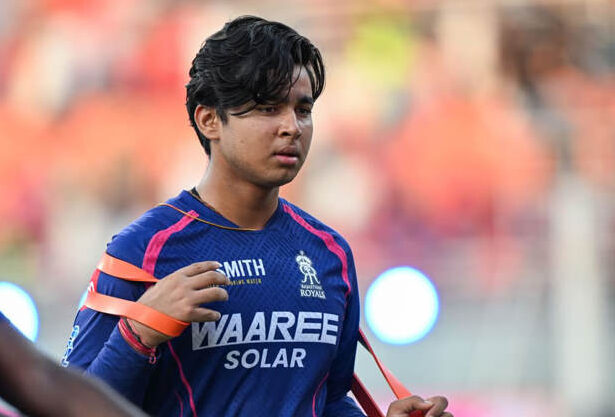
'He's still a child'... BCCI Makes Special Arrangement For 15-Year-Old Vaibhav Suryavanshi, Parents To Accompany Him On England Tour
The rise of 15-year-old batting sensation Vaibhav Suryavanshi has triggered an unusual legal debate over underage participation in professional cricket, even as BCCI rules currently permit talented teenagers to compete in the IPL under strict conditions
The meteoric rise of teenage cricket sensation Vaibhav Suryavanshi in IPL 2026 has sparked a heated debate over whether players under the age of 18 should be allowed to participate in professional cricket tournaments like the Indian Premier League.

The controversy erupted after a social activist threatened legal action against Rajasthan Royals, alleging that allowing a 15-year-old to play in a high-pressure commercial league amounted to “child labour”.
“This 15-year-old boy is being exploited. He is just a child and has been brought into the IPL to play professional cricket. This is nothing but child labour,” the activist claimed while demanding action against the franchise management.

The remarks quickly went viral online, triggering widespread debate among cricket fans, legal experts and sports followers.
🚨 Police FIR against Rajasthan Royals 🚨
— CricketGully (@thecricketgully) May 2, 2026
This activist wants Vaibhav Sooryavanshi to stop playing in the IPL, calling it child labour and saying he needs to focus on his studies.
Plans to file a case against Rajasthan Royals. 😲pic.twitter.com/lcqE9jBeTi
Under Indian law, participation of minors in professional sports competitions is not automatically considered child labour.
The Child Labour Act restricts children from working in hazardous industries, but sports and entertainment activities can fall under permitted categories if strict conditions related to education, safety and welfare are maintained.
Legal experts point out that IPL players sign professional contracts governed by the Board of Control for Cricket in India (BCCI), which includes safeguards regarding training, supervision and player welfare.
While there is no strict minimum age limit for IPL participation, the BCCI has tightened eligibility norms for young cricketers.
Players below 19 years cannot directly enter the IPL auction without proving themselves in domestic cricket.
According to the updated rules, teenage players must have represented their state team in at least one recognised first-class or Ranji Trophy-level match before becoming eligible for the IPL auction.
The move was introduced to ensure that young players are physically and mentally prepared for the pressure of elite-level cricket.
The earlier “street-to-IPL” pathway has effectively been closed, with the BCCI now insisting on domestic red-ball experience before entry into the league.
Despite his young age, Suryavanshi has already established himself as one of the most explosive batters in T20 cricket.
Since making his IPL debut at just 14 years and 23 days old in 2025, the teenager has scored 656 runs in 17 IPL matches at an average of 38.59 and an astonishing strike rate of 224.66, including two centuries and three half-centuries.
He created history by becoming the youngest-ever T20 centurion after smashing a 35-ball hundred against Gujarat Titans in IPL 2025.
In IPL 2026, he continued his remarkable form with another blistering century against Sunrisers Hyderabad.
The young batter also starred in the 2026 Under-19 World Cup, where he guided India to the title and won the Player of the Tournament award after a sensational 175-run knock in the final.
While many fans and former cricketers have praised the teenager’s talent and maturity, others believe such young players should focus more on academics and gradual development before entering high-profile leagues.
However, under the present BCCI framework and existing laws, experts say there is currently no legal restriction preventing exceptionally talented teenagers from playing in the IPL, provided they fulfil the eligibility and welfare requirements laid down by cricket authorities.