Bombay HC Questions Free Housing Policy, Warns Against ‘Vertical Slums’ In Mumbai
Bombay HC Questions Free Housing Policy, Warns Against ‘Vertical Slums’ In Mumbai
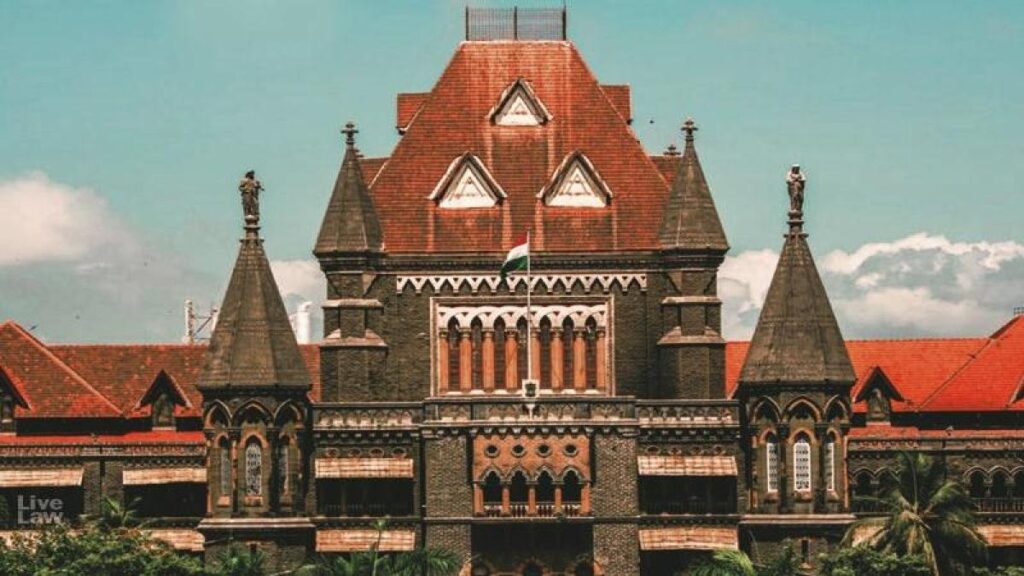
The Bombay High Court has raised serious concerns over Maharashtra’s slum rehabilitation policies, questioning repeated extensions of cut-off dates for eligibility, the practice of free housing for all beneficiaries, and the creation of densely populated ‘vertical slums’ through redevelopment projects.
In a significant observation on Mumbai’s long-running slum rehabilitation policies, the Bombay High Court has questioned whether the current system of providing free housing and repeated extensions of eligibility cut-off dates is sustainable in the long term.
The court made the observations while reviewing the implementation and functioning of the Maharashtra Slum Areas Act, 1971. A bench of the High Court delivered an extensive verdict after deliberating on multiple aspects of slum redevelopment, rehabilitation, land usage, and the functioning of the Slum Rehabilitation Authority (SRA).
The bench strongly criticised the repeated extension of the “cut-off date” used to determine eligibility for slum rehabilitation benefits. The court observed that once a date is fixed, settlements that emerge after that period should not automatically qualify for rehabilitation benefits, warning that such practices indirectly encourage encroachment on public land.

The judges also questioned the broader approach of offering completely free housing to every beneficiary. According to the court, the assumption that every economically weaker family in urban areas must necessarily receive free housing requires reconsideration.
The bench suggested that beneficiaries could instead contribute a portion of the construction cost, supported by subsidised loan schemes from the government. For families unable to afford repayments, the court proposed options such as housing on a “leave and license” basis.
Another major concern raised by the court was the increasing transformation of redevelopment projects into what it described as “vertical slums.”
The judges warned that redevelopment should not simply replace horizontal slums with overcrowded high-rise structures lacking adequate planning and infrastructure. The court stressed that redeveloped buildings must provide better living standards, including open spaces, children’s play areas, ventilation, and improved amenities.
It also criticised the poor quality of construction in some rehabilitation projects and suggested that developers should remain responsible for construction quality for at least ten years after project completion.
The court further questioned why slum rehabilitation projects on government-owned lands are largely driven by societies, developers, and SRA mechanisms while government agencies such as MHADA, MMRDA, and the State often remain passive participants despite being the actual landowners.
According to the bench, this structure has led to situations where commercial interests dominate redevelopment projects, sometimes at the cost of the rights and welfare of slum dwellers themselves.
The High Court also expressed concern over the shrinking availability of vacant public land in Mumbai due to large-scale encroachments. It suggested that certain government lands should be protected as “Community Land Reserves” and used only for public welfare and low-income housing needs.
In another key observation, the court questioned the policy of “in-situ” rehabilitation in every case, asking why encroachments on public lands must necessarily be regularised at the same location instead of exploring rehabilitation elsewhere.
The bench also highlighted the condition of slums near Mumbai airport, noting that such large settlements continue to exist for decades despite restrictions on building heights and the impact on the city’s global image.
The judgment additionally called for stricter scrutiny of developers participating in SRA projects. The court observed that only financially capable and technically experienced developers with proven project records should be allowed to undertake rehabilitation schemes.
The observations are expected to trigger wider discussions around Mumbai’s redevelopment model, affordable housing policy, urban planning, and the future direction of slum rehabilitation in Maharashtra.