Mumbai–Goa Highway ‘Gamechanger’ Update: Six Bottlenecks Decide When Travel Trouble Ends
Mumbai–Goa Highway ‘Gamechanger’ Update: Six Bottlenecks Decide When Travel Trouble Ends
Six critical bypasses and flyovers are delaying the long-promised smooth drive on NH-66, with phased relief expected from March 2026 onward.
The long-awaited widening of the Mumbai–Goa National Highway (NH-66) continues to test the patience of travellers, with six major bottlenecks now determining when commuters can finally experience a smoother and faster journey. Despite years of work, traffic congestion, damaged roads, and unfinished flyovers still force motorists to spend eight to nine hours on a route that was promised to be completed in six.
The most critical stretch lies between Indapur and Zarap, covering nearly 470 km and now directly monitored by the Union Ministry of Road Transport and Highways (MoRTH). Here, two incomplete bypasses — the 3 km Indapur bypass and the 7 km Mangaon bypass — remain the biggest hurdles. Although both were part of the original project, delays in execution forced MoRTH to issue fresh tenders six months ago. While work has finally begun, officials say these bypasses are unlikely to be completed before March 2027.
This delay means that traffic will continue to pass through Indapur and Mangaon towns, where internal city vehicles and highway traffic clash, creating massive jams during peak hours. Though roads have been temporarily widened to ease pressure, commuters complain that the relief is limited and short-lived, especially during weekends and holiday travel.

Officials maintain that the condition of the highway is not uniformly bad. Congestion is largely restricted to active construction zones. In areas where work is complete, road quality has improved significantly and travel has become faster. Service roads have also been provided near flyovers to maintain traffic flow.
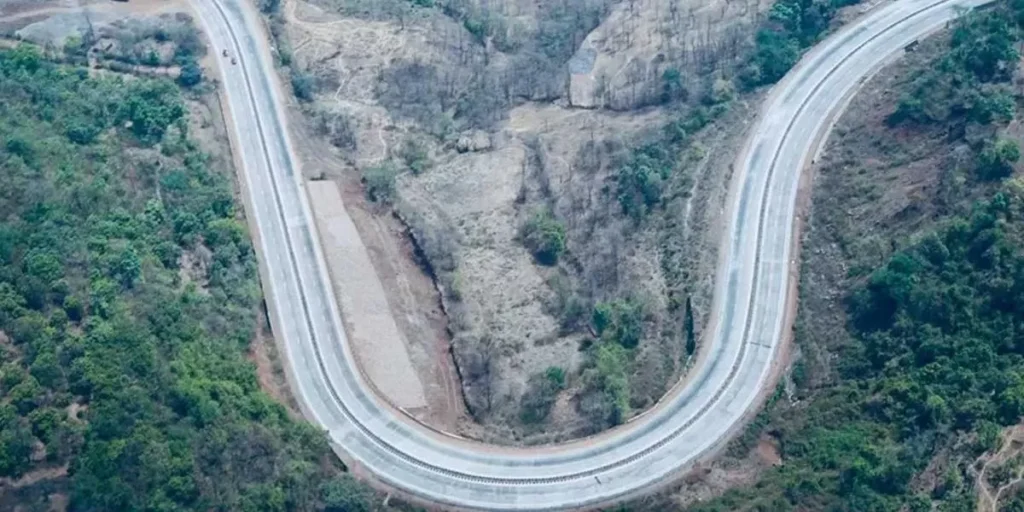
Beyond Mangaon, conditions improve considerably. The widening work between Parshuram Ghat and Zarap is almost complete, and this stretch now allows smoother travel. However, the most stubborn delays remain in Ratnagiri district, where four unfinished flyovers continue to choke movement.
These flyovers are located at:
- Lanja
- Nivali
- Pali
- Sangameshwar
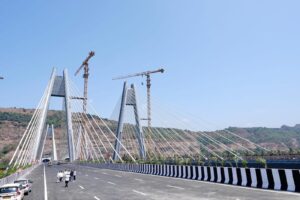
Each is approximately 800 metres long and has been under construction for nearly two years. Together, they form the second major obstacle after the Indapur and Mangaon bypasses. According to MoRTH officials, all four flyovers are targeted for completion by March 2026. Once operational, they are expected to ease traffic bottlenecks that currently force vehicles into narrow and uneven diversions.
Officials said that excluding these four flyovers and two bypasses, it is already possible to travel from Panvel to Goa in eight to nine hours. However, until these six turning points are resolved, the promised six-hour travel time will remain out of reach.
The phased completion plan now looks like this:
- By March 2026: Completion of the four flyovers in Ratnagiri district
- By March 2027: Completion of Indapur and Mangaon bypasses
Only after both phases are completed can motorists expect uninterrupted movement and a significant reduction in travel time.
For commuters, the impact is deeply felt. Long traffic jams, poor road patches, and unpredictable delays have turned routine journeys into exhausting experiences. Tourist traffic towards Konkan beaches, especially during festivals and holidays, only worsens the situation.
Local residents and regular travellers say the problem is not just delay but uncertainty. Even a small accident or breakdown near the bottleneck zones can paralyse traffic for hours. Many now avoid night travel and peak-hour movement altogether.
MoRTH officials stress that despite visible delays, the project is finally moving in the right direction after years of administrative and contractual setbacks. They describe the six bottlenecks as the true “game changers” of the Mumbai–Goa Highway.
Until these six turning points are cleared, commuters must continue navigating a highway that is half modern, half unfinished — a route where smooth stretches suddenly give way to chaos. The real relief, according to officials, will only come when the bypasses and flyovers finally allow uninterrupted high-speed movement across the entire corridor.