PCMC’s Big Decision: Housing Societies Must Process Wet Waste; Collection To Stop From July 1
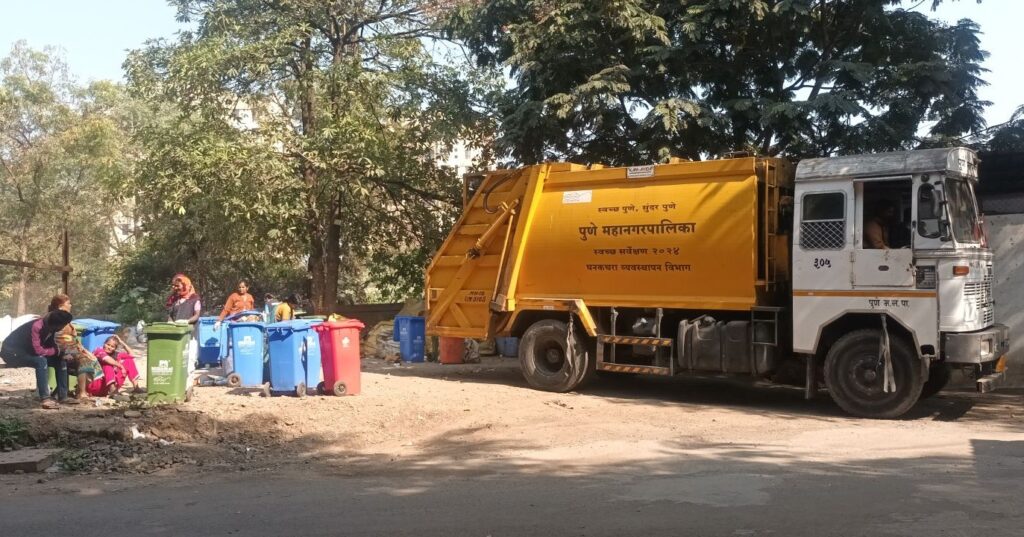
PCMC’s Big Decision: Housing Societies Must Process Wet Waste; Collection To Stop From July 1
Large housing societies and bulk waste generators in Pimpri-Chinchwad will have to scientifically process wet waste on their premises or face penalties and legal action.
Pimpri-Chinchwad Municipal Corporation (PCMC) has announced a major crackdown on housing societies and establishments that fail to manage their own wet waste. From July 1, the civic body will stop collecting wet waste from large housing societies, marriage halls, educational institutions, hostels, companies, canteens and food stalls that fall under the category of bulk waste generators.

The move follows recent directions on solid waste management and aims to reduce the burden on municipal waste disposal facilities. Establishments generating 100 kg or more waste per day will be required to process wet waste within their own premises through composting or biomethanisation projects.
The rule also applies to establishments spread across more than 20,000 square metres and those consuming 40,000 litres or more water daily. Such institutions must set up waste-processing facilities and obtain the necessary approvals and certifications.

Housing societies with more than 100 flats have also been directed to install sewage treatment plants (STPs) and reuse treated water for activities such as toilet flushing, gardening and cleaning of premises and vehicles. Civic authorities have already initiated action against several societies that failed to comply with environmental norms.
Societies and establishments have been given time until June 30 to establish composting facilities. After the deadline, wet waste generated by non-compliant establishments will no longer be collected by the municipal corporation. Responsibility for disposal will rest entirely with the waste generators.
The civic body has warned of strict action against violators. A fine of ₹5,000 may be imposed for the first violation, while repeat offenders could face penalties of ₹15,000. If establishments continue to ignore the rules, criminal proceedings may be initiated against responsible office-bearers under environmental protection laws.
The municipal corporation has made it clear that wet waste from large housing societies, marriage halls, educational institutions, hostels, companies, canteens and food establishments will not be collected after June 30. The responsibility of scientific disposal will lie with the concerned establishments.
Officials believe the decision will encourage decentralised waste management and reduce pressure on municipal waste processing infrastructure. Compost generated from biodegradable waste can be reused within premises, helping societies and institutions adopt more sustainable waste-management practices.
The new rules are expected to affect nearly a thousand large housing societies and establishments across Pimpri-Chinchwad, making scientific disposal of wet waste a mandatory civic responsibility from July 1.
Disclaimer: Residents and housing societies should verify compliance requirements and deadlines with PCMC, as regulations and enforcement measures may be revised from time to time.