Purchase of Property Through Forged Will: Supreme Court Says Innocent Buyer Cannot Be Treated As Criminal
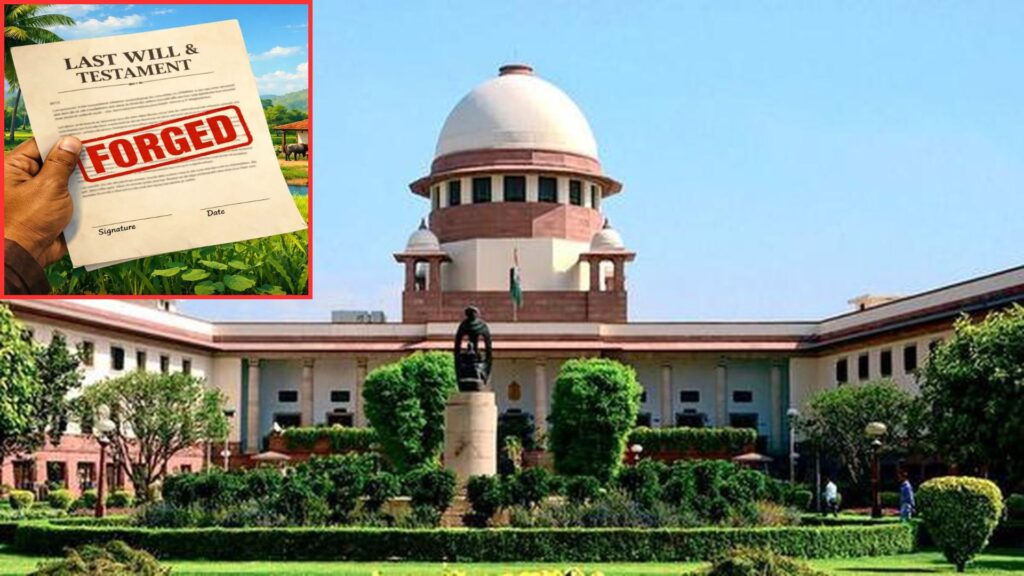
Purchase of Property Through Forged Will: Supreme Court Says Innocent Buyer Cannot Be Treated As Criminal
Top court says innocent buyer cannot be punished for seller’s fraud without proof of involvement
The Supreme Court has ruled that a buyer cannot be held criminally liable if a property purchased by them is later found to be based on a forged will. The court made it clear that unless there is clear evidence showing the buyer’s involvement in fraud or forgery, criminal charges cannot be sustained.
A bench of Justices Vikram Nath and Sandeep Mehta quashed criminal proceedings against a purchaser who had been accused in a long-running property dispute. The court observed that the buyer had no knowledge of the alleged forgery at the time of purchase and had acted in good faith.

The case stemmed from a family property dispute in Tamil Nadu. A will, allegedly created in 1988 before the death of the property owner, was later claimed to be forged. Based on this disputed will, the property was sold to multiple buyers in 1998.

One of the buyers was later named as an accused in a criminal case involving charges of cheating, forgery and conspiracy. He approached the court, stating that he had purchased the property legally, paid full consideration, and had no role in creating or using any forged document.
The Supreme Court emphasised that simply because a transaction is later found to be linked to a forged document, it does not automatically make the buyer a criminal.
The bench noted that there was no material evidence to show that the buyer had participated in the forgery or had prior knowledge of it. In fact, the court pointed out that in such situations, the buyer is often the one who suffers, as their ownership rights become uncertain.
The court also clarified that the offence of cheating requires proof that the accused knowingly deceived someone to gain property. Since the buyer had not induced or misled anyone, the provisions of cheating under criminal law were not applicable.
“The purchaser cannot be considered to have committed fraud or cheating merely because the seller’s title later turns out to be defective,” the court observed.
This ruling reinforces an important legal principle: a bona fide buyer who purchases property after due diligence and without knowledge of fraud cannot be prosecuted for the seller’s wrongdoing.
The Supreme Court ultimately allowed the appeal and dismissed all criminal cases against the buyer, bringing relief in a dispute that had continued for decades.