Rare White House Crow Spotted In Pune, Highlights Unique Case Of Leucism
Rare White House Crow Spotted In Pune, Highlights Unique Case Of Leucism
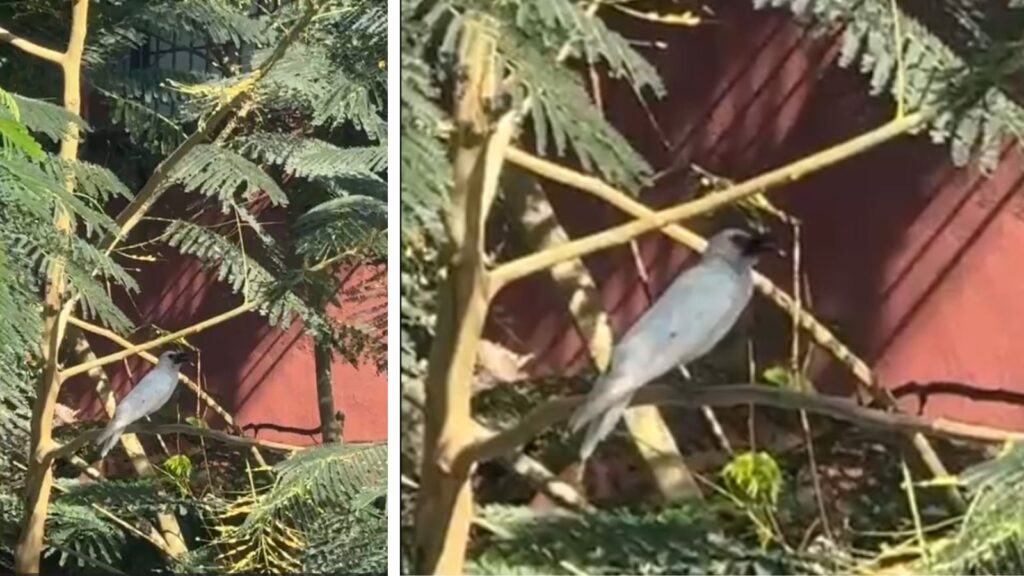
Pune, April 17, 2026: In a remarkable sighting that has caught the attention of bird enthusiasts and nature lovers, a rare completely white House Crow (Corvus splendens) has been recorded in Pune, a city known for its rich biodiversity.
The unusual bird was observed moving within a flock of regular black crows, but its striking all-white appearance made it stand out prominently.
The sighting first came to the notice of Police Inspector Vijaymala Pawar, who promptly informed bird lover Balasaheb Dhamale and nature researcher Akash Raut. Following this, the rare crow was carefully observed and documented.

Experts have identified the reason behind the crow’s white coloration as Leucism, a rare genetic condition. Normally, birds produce a pigment called melanin, which gives their feathers black, brown, or other colors. However, due to genetic variation or mutation, the production of this pigment is reduced or absent, resulting in partially or completely white plumage.
Importantly, leucism differs from albinism. In cases of albinism, birds typically have reddish eyes due to the complete absence of pigment, whereas in leucism, the eye color remains natural. Observers confirmed that the Pune crow is a clear example of leucism.
Such white crows are extremely rare. Their distinct appearance makes them easily noticeable, which can increase the risk from predators. In some cases, they may also face different behavior within their flock. However, the crow spotted in Pune was seen moving comfortably with its group, which is considered a positive sign.
Incidents like these underline the ecological richness of urban environments like Pune. Amid rapid urbanisation, such rare sightings serve as an important reminder of the need for biodiversity conservation. Citizens are urged to remain aware and ensure that such rare birds are not disturbed or harmed.
The white House Crow recorded in Pune stands as a vivid example of nature’s diversity and continues to attract the interest of researchers and bird enthusiasts alike.