US Tariffs, IT Layoffs Dent Pune Housing Market; New Home Sales Fall 20% In 2025
US Tariffs, IT Layoffs Dent Pune Housing Market; New Home Sales Fall 20% In 2025
Rising prices and job uncertainty disrupt buyer confidence even as overall turnover improves
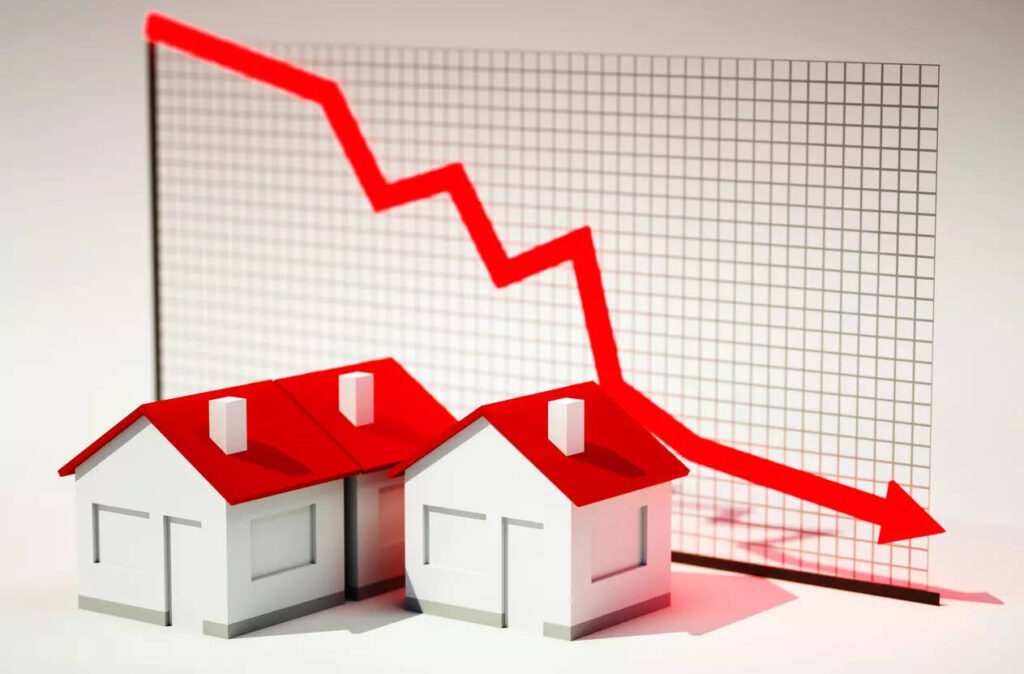
Pune’s residential real estate market has taken a visible hit in 2025, with new apartment sales declining by 20% compared to last year, amid the combined impact of US-imposed tariffs, layoffs in the information technology sector, and steadily rising property prices. Market experts say the financial equation for homebuyers has weakened sharply, making purchase decisions more cautious across key urban pockets.
According to real estate data cited by industry analysts, the slowdown in Pune mirrors a broader trend seen in major metros, particularly Mumbai. However, Pune has emerged as one of the worst-affected cities due to its heavy dependence on IT-driven employment and export-linked sectors, both of which have faced sustained pressure this year.
The additional import duties imposed by the US under former President Donald Trump’s tariff regime have had ripple effects across global and domestic markets. Combined with ongoing geopolitical tensions, these measures have contributed to uncertainty in export-oriented businesses, indirectly impacting job stability in India’s IT sector. Pune, being a major IT hub, has seen the consequences play out directly in housing demand.

Market research agency data shows that new home absorption in Pune stood at 65,135 units in 2025, down from 81,090 units in the previous year. This marks a sharp year-on-year contraction and places Pune among the top metro cities witnessing the steepest decline in new apartment sales. In comparison, Hyderabad recorded a 23% drop, while the Mumbai Metropolitan Region saw an 18% decline. Chennai was the only major metro to register growth, with a 15% rise in sales.
Despite the fall in volumes, overall turnover in the housing market has increased. Industry experts attribute this to rising property prices and premiumisation, where buyers opting to purchase are choosing higher-value homes. House prices across Pune and Mumbai have risen at an annual rate of around 8%, further stretching affordability for middle-income buyers.
Anuj Puri, Chairman of the Anarock Group, noted that 2025 has been marked by broad-spectrum upheaval, including tariff tensions, IT job cuts, and economic uncertainty. While fewer homes are being sold, higher ticket sizes have pushed up the total value of transactions nationwide.
Across India’s top seven metro cities, new apartment sales fell 14% in 2025 to 3.95 lakh units. However, the total turnover from these sales rose to nearly ₹6 lakh crore, compared to ₹5.68 lakh crore last year. Mumbai continued to lead in volume with over 1.27 lakh homes sold, followed by Pune at over 65,000 units. Together, Mumbai and Pune accounted for nearly half of the country’s total home sales.
Analysts also pointed out the “higher base effect” as a contributing factor to the slowdown. Strong sales recorded in 2024 have made the year-on-year comparison less favourable, even as structural issues like affordability and job insecurity persist.
Looking ahead, experts suggest that a potential cut in interest rates by the Reserve Bank of India could provide some relief and revive buyer sentiment in 2026. Until then, Pune’s housing market is expected to remain cautious, with buyers prioritising financial security over large-ticket investments.
Disclaimer: This article is for general information purposes only and does not constitute financial or investment advice.