BKC Pod Taxi Project To Transform Mumbai Commute, Target 6 Lakh Daily Users
BKC Pod Taxi Project To Transform Mumbai Commute, Target 6 Lakh Daily Users
Driverless pod taxis planned across 8.8 km network aim to cut congestion and boost last-mile connectivity in Mumbai’s busiest business hub
Mumbai’s ambitious pod taxi project at Bandra-Kurla Complex (BKC) is being positioned as a major step toward easing traffic congestion and improving last-mile connectivity in one of the city’s busiest commercial districts. Planned by the Mumbai Metropolitan Region Development Authority, the system is expected to serve between 4 lakh and 6 lakh commuters daily.
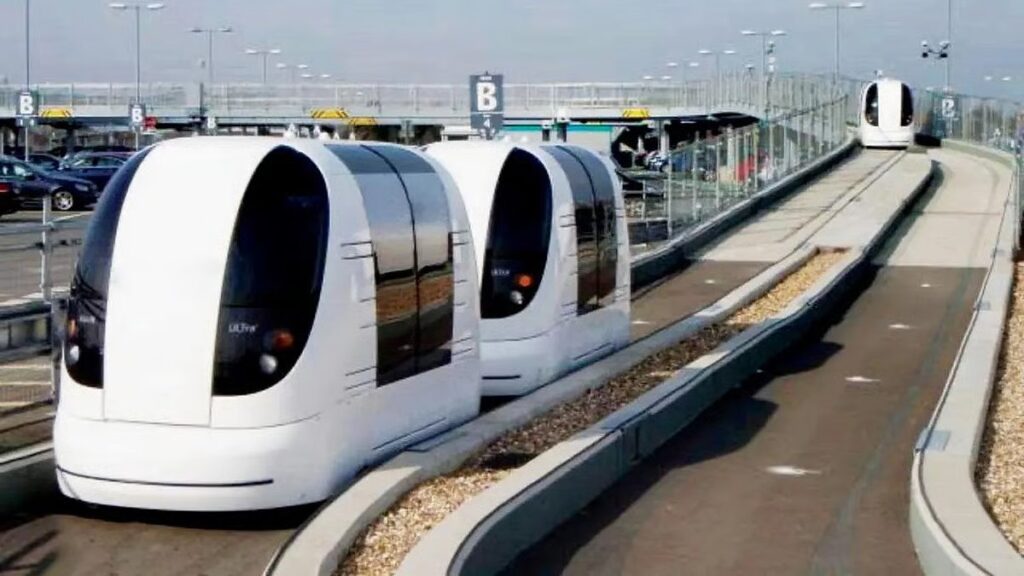
The project, also known as the Automated Rapid Transport System (ARTS), will feature compact, battery-powered pods that can carry up to six passengers and travel at speeds of up to 40 kmph. Designed for efficiency, the pods will operate autonomously and run at high frequency, with intervals of just 15 to 30 seconds between rides.
Officials say the system is particularly suited for BKC’s narrow and congested roads, especially those connecting the business district to Bandra and Kurla railway stations. “The necessity for efficient last mile connectivity has become paramount… The Pod Taxi system, being fully autonomous and capable of operating at a frequency of every 15 to 30 seconds, is ideally suited,” MMRDA stated.

The full network will span 8.8 km and include 38 stations. The project will be implemented in two phases. The first phase will cover 3.36 km with 22 stations placed roughly 200 metres apart for easy accessibility. The second phase will extend around 5.5 km and include 16 additional stations.
Each pod will run on a demand-based model, meaning it will not stop at every station like traditional public transport. Instead, it will travel directly to the passenger’s selected destination, reducing travel time significantly. The system will be centrally monitored and managed through a dedicated control room.
The project, estimated to cost around ₹1,017 crore, will be executed through a public-private partnership (PPP) model and is not expected to require financial subsidy from the state government. A feasibility study has suggested fares starting at ₹21 per kilometre, with a possible 4% annual increase to account for inflation.
Currently, BKC sees a daily footfall of 4 to 6 lakh people, including office-goers and visitors to commercial hubs, banks, and the diamond market. Over 20,000 cars enter the area each day, leading to severe congestion during peak hours. Authorities believe the pod taxi system could eventually cater to over 17% of total traffic in the area, with projected ridership reaching 1.12 lakh by 2041.
However, the project has faced delays due to land-related issues for terminal stations. The matter has now been escalated to the Chief Minister’s War Room to resolve bottlenecks and speed up implementation.
With upcoming infrastructure projects like the bullet train corridor expected to increase footfall in BKC, officials see the pod taxi system as a forward-looking solution. If successfully implemented, it could become a model for similar urban mobility projects across India, offering a glimpse into a more seamless and technology-driven commuting future.