India’s Largest 2,000-Year-Old Circular Labyrinth Unearthed In Maharashtra’s Solapur
India’s Largest 2,000-Year-Old Circular Labyrinth Unearthed In Maharashtra’s Solapur
Discovery in Boramani grasslands hints at Satavahana-era engineering and Indo-Roman trade links
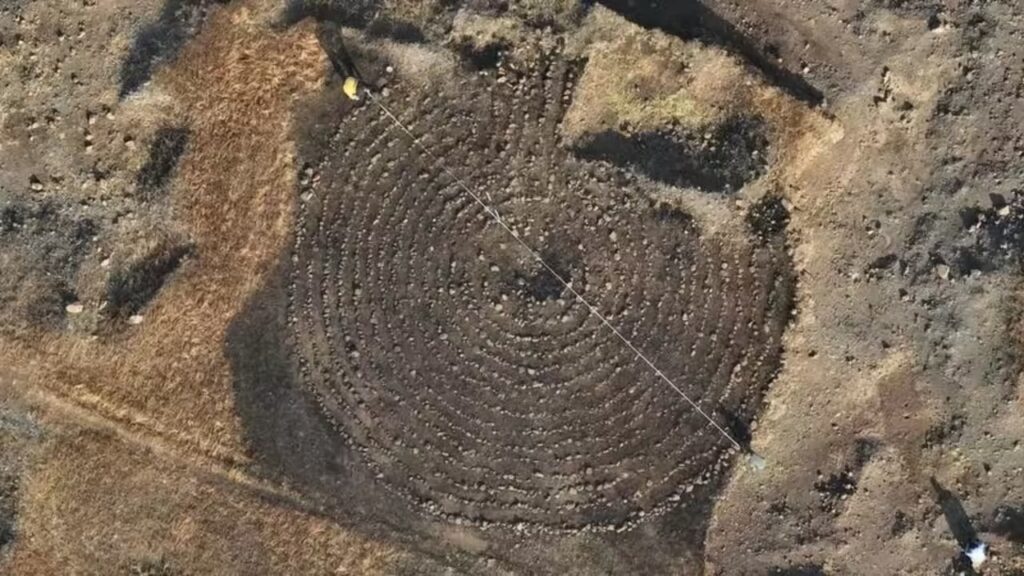
Archaeologists have discovered India’s largest circular stone labyrinth in the Boramani grasslands of Solapur district, Maharashtra, a finding that could significantly reshape understanding of ancient trade networks and cultural exchange in the Deccan region. The structure, believed to be over 2,000 years old, is the biggest circular labyrinth recorded in the country so far.
The labyrinth was found around 20 kilometres southwest of Solapur city, within the Boramani grasslands — a protected semi-arid ecosystem known for its wildlife, including blackbucks, wolves, foxes and migratory birds. The site came to light accidentally when a wildlife NGO team monitoring local fauna noticed a distinctive stone formation hidden among tall grass.
Subsequent archaeological examination revealed a meticulously carved circular labyrinth with 15 concentric stone circuits, measuring approximately 50 feet by 50 feet. Experts say its perfectly circular design is unprecedented in India. Earlier discoveries in states such as Tamil Nadu featured square or smaller labyrinths, making the Boramani find unique in scale and form.

Archaeologists have tentatively dated the structure to the Satavahana dynasty, which ruled large parts of the Deccan between the 1st and 3rd centuries CE. During this period, Maharashtra was a key hub in long-distance trade between India and the Roman world. The design of the labyrinth closely resembles patterns seen on ancient Roman coins, particularly those from Crete, many of which circulated widely in Indian ports and inland trading centres during Indo-Roman commerce.
Smaller labyrinths discovered earlier in Sangli, Satara and Kolhapur districts suggest the possibility of a broader network of such structures across western Maharashtra. Experts believe these stone mazes may have served as navigational markers or symbolic signposts guiding Roman and Indian traders travelling inland from the western coastline.
The location of the labyrinth in an open grassland, rather than within a settlement or temple complex, has raised fresh questions about its exact function. Some researchers suggest it could have acted as a landmark on ancient trade routes, while others point to possible ritualistic or symbolic significance.
Its survival for over two millennia is largely attributed to its placement within a protected grassland zone, which limited urban development and large-scale disturbance. However, archaeologists have stressed the need for careful preservation to ensure that future excavation and documentation do not damage the fragile ecosystem.
The discovery is being described as a rare intersection of archaeology, ecology and history. Experts say it underscores Maharashtra’s role as a vital crossroads of global commerce in ancient times and highlights the sophisticated planning and cultural exchanges that existed in the region centuries ago.