Jagannath Rath Yatra 2026 Begins Today: Full Schedule, Rituals, Spiritual Significance And Why Millions Flock To Puri
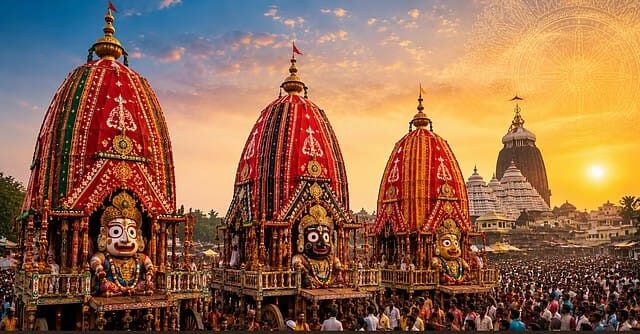
Jagannath Rath Yatra 2026 Begins Today: Full Schedule, Rituals, Spiritual Significance And Why Millions Flock To Puri
The world-famous Jagannath Rath Yatra has commenced in Puri, Odisha, with lakhs of devotees gathering to witness Lord Jagannath, Lord Balabhadra and Goddess Subhadra embark on their annual journey from the Jagannath Temple to the Gundicha Temple.
One of India’s largest and oldest religious festivals, Jagannath Rath Yatra 2026 began on Thursday, July 16, in Puri, Odisha. Celebrated on the Dwitiya Tithi of Ashadha Shukla Paksha, the annual chariot festival is not only a major spiritual event for Hindus but also a cultural spectacle that attracts devotees and tourists from across India and abroad. The official temple calendar also lists the main Rath Yatra on July 16, followed by a series of important rituals culminating in Niladri Bije on July 27.

Unlike regular days, when devotees visit the Jagannath Temple for darshan, Rath Yatra is unique because Lord Jagannath, accompanied by elder brother Lord Balabhadra and sister Goddess Subhadra, comes out of the sanctum to bless everyone, including those who may not be able to enter the temple. The deities travel about three kilometres along the Grand Road (Bada Danda) to the Gundicha Temple, where they stay for several days before returning.

Jagannath Rath Yatra 2026 Schedule
| Date | Event |
|---|---|
| July 16 | Rath Yatra (Main Chariot Procession) |
| July 20 | Hera Panchami |
| July 24 | Bahuda Yatra (Return Journey) |
| July 25 | Suna Besha (Golden Attire) |
| July 26 | Adhara Pana Ritual |
| July 27 | Niladri Bije (Return to Jagannath Temple) |
The festival concludes with Niladri Bije, when the deities ceremonially re-enter the Jagannath Temple after completing their annual journey.
Why Is Rath Yatra So Special?
Jagannath Rath Yatra symbolises the Lord’s desire to personally meet His devotees. According to tradition, the journey represents Lord Jagannath’s visit to the Gundicha Temple, believed to be the home of his aunt.
The festival also carries a powerful social message. During Rath Yatra, people from all communities, irrespective of caste, religion or social background, gather together to pull the massive chariots, reflecting the ideals of equality, unity and devotion.
Three New Chariots Built Every Year
One of the most remarkable aspects of the festival is that the three giant wooden chariots are constructed afresh every year using traditional methods by hereditary artisans.
The three chariots are:
- Nandighosha – Lord Jagannath’s chariot
- Taladhwaja – Lord Balabhadra’s chariot
- Darpadalana (Devadalana) – Goddess Subhadra’s chariot
Traditional craftsmen begin construction months in advance using specially selected wood. The structures are assembled without conventional iron nails, relying largely on wooden joints and age-old engineering techniques that have been preserved for generations.
Chera Pahara: A King Serves the Lord
One of the most significant rituals is Chera Pahara, during which the Gajapati Maharaja of Puri ceremonially sweeps the platforms of the three chariots with a golden broom while sprinkling fragrant water.
The ritual symbolises that before God, everyone is equal, whether a king or a common citizen, and reinforces the values of humility and selfless service.
Spiritual Significance
Devotees believe that witnessing or participating in Rath Yatra brings spiritual merit and divine blessings. Pulling the ropes of the chariots is considered highly auspicious and symbolises surrender to the divine.
The procession also highlights the inclusive nature of the festival, as Lord Jagannath comes out of the temple to offer darshan to all devotees, including those unable to enter the shrine.
Interesting Facts About Jagannath Rath Yatra
- It is among the world’s oldest continuously celebrated chariot festivals.
- The three wooden chariots are rebuilt every year using traditional craftsmanship.
- The journey from the Jagannath Temple to the Gundicha Temple covers nearly 3 km.
- Lakhs of devotees gather annually in Puri, while similar Rath Yatra processions are organised in many cities across India and overseas.
- The festival is closely associated with the Vaishnav tradition and forms an important part of Odisha’s cultural heritage.
Travel Advisory for Devotees
Authorities generally advise pilgrims to:
- Follow official crowd management and security instructions.
- Carry drinking water and essential medicines.
- Wear comfortable clothing and footwear suitable for long hours outdoors.
- Keep children and elderly family members under close supervision.
- Avoid overcrowded areas and use designated entry and exit routes.
FAQs
1. When is Jagannath Rath Yatra 2026?
Jagannath Rath Yatra is being celebrated on Thursday, July 16, 2026, corresponding to Ashadha Shukla Dwitiya.
2. Why is Jagannath Rath Yatra celebrated?
The festival marks the annual journey of Lord Jagannath, Lord Balabhadra and Goddess Subhadra from the Jagannath Temple to the Gundicha Temple, symbolising the Lord’s desire to bless devotees outside the temple.
3. What is Bahuda Yatra?
Bahuda Yatra is the return procession of the three deities from the Gundicha Temple back to the Jagannath Temple. In 2026, it will be observed on July 24.
4. Why are new chariots built every year?
According to centuries-old temple tradition, fresh wooden chariots are constructed annually by hereditary artisans using traditional techniques, making each year’s procession unique.
5. What is the significance of Chera Pahara?
During Chera Pahara, the King of Puri ceremonially sweeps the chariots with a golden broom, conveying that all people are equal before the divine, regardless of status or position.
Disclaimer: Dates and rituals mentioned in this article are based on the official Jagannath Temple festival calendar and publicly available religious schedules. Timings and ceremonial details may vary according to temple authorities.