Why Do Railway Tracks Have Gaps Between Them, and How Much Space Is There?
Why Do Railway Tracks Have Gaps Between Them, and How Much Space Is There?
We often notice the rails stretching endlessly along the tracks, but if you look closely, you’ll see small gaps between them. Have you ever wondered why these spaces exist and how they are designed? Many people travel by train every day, yet very few stop to think about the engineering behind these simple-looking gaps.
Even today, trains carry millions of passengers across India, and the operations at stations sometimes seem puzzling. For instance, you may have noticed that trains often halt at signals outside a platform, even when it appears empty. This is done for safety and operational reasons, ensuring the track ahead is clear and all procedures are followed before the train enters the station.
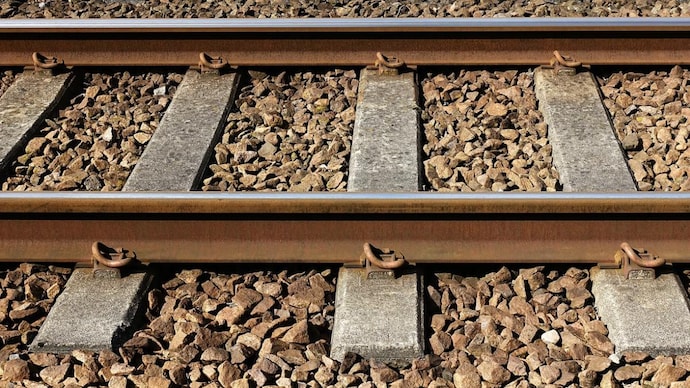
If you’ve ever observed the rails closely at a railway crossing or while standing on a platform, you’ll notice that the rails are not one continuous piece. Instead, they are joined at regular intervals. It is practically impossible to construct rails in one long piece spanning kilometers, so multiple sections are connected together to form a track.

The Purpose of the Gaps
Where two rail sections meet, a small gap is intentionally left. This is not a mistake or just empty space. These gaps are carefully planned and designed for passenger safety and the long-term durability of the railway network.
Why Gaps Are Needed
Rail tracks are made of steel, which changes size with temperature. In cold weather, steel contracts, and in hot weather, it expands. If there were no gaps to allow for this natural expansion and contraction, the rails could bend or even break, creating a significant risk of accidents. These gaps, therefore, are a simple yet vital safety measure.
Types of Tracks in India
India’s railway network uses three main types of tracks:
Broad Gauge: 1.676 meters – covers most of the country
Meter Gauge: 1.000 meter – used in some regions historically
Narrow Gauge: 762 mm – still operational in hilly areas and heritage lines
Among these, broad gauge is the most widespread and forms the backbone of the Indian Railways system.
Every detail of a railway track, including the gaps between rails, is designed with precision and safety in mind. What may seem like a small space is actually a critical feature that allows steel rails to adjust to temperature changes, ensures smooth train operation, and protects millions of passengers every day.
Note: This information is provided for general educational and informational purposes only.