Are Black Spots on Onions Safe to Eat? Bengaluru Nutritionist Explains When to Throw Them Away
Are Black Spots on Onions Safe to Eat? Bengaluru Nutritionist Explains When to Throw Them Away
We’ve all been there — picking up an onion and spotting black patches on its skin. The question is, can you still use it? To clear up the confusion, Bharathi Kumar, Nutritionist at Fortis Hospital, Nagarbhavi, Bengaluru, explained to HT Lifestyle what these spots mean, how they form, and when it’s time to toss the onion.
What Causes Black Spots on Onions
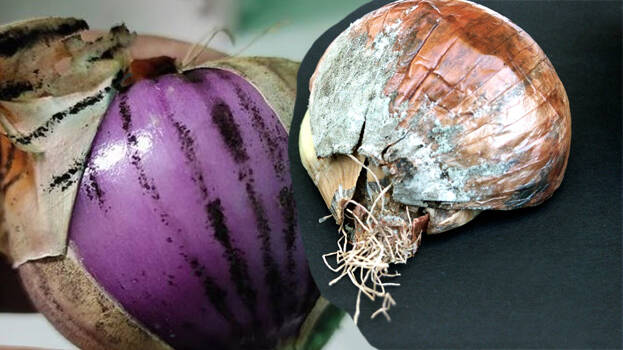
Bharathi said the black or sooty marks are usually the result of a common fungus called Aspergillus niger. This fungus grows in warm, humid, and poorly ventilated conditions. While it’s not the same as the “black fungus” (mucormycosis) that affects humans, it can still lead to mild contamination and should not be ignored.
How Onions Get Infected
According to Bharathi, fungal growth begins when onions are bruised or stored in damp environments. “If moisture levels are too high during transport or storage, spores can infect the outer layers, forming a dusty, charcoal-like coating,” she said.

Are Such Onions Safe to Eat?
“Though the fungi behind these black spots aren’t extremely toxic in small amounts, they can produce ochratoxin A — a toxin that may harm the kidneys and liver with long-term exposure,” Bharathi warned. This toxin is heat-resistant, meaning cooking won’t remove it.
When to Discard Onions
If the black spots are limited to the outer, dry layers and the inside looks fresh and firm, you can peel off the affected skin, rinse the onion, and use it. However, if the patches go deeper, or the onion feels soft, slimy, or smells bad, it’s best to discard it.
“Clinically speaking, surface discolouration isn’t risky if the inner layers are unaffected,” Bharathi said. “But when in doubt, it’s better to be cautious.”
Who Should Avoid Them Entirely
People with weakened immune systems, uncontrolled diabetes, chronic liver or lung conditions, or those on immunosuppressive drugs should avoid any produce showing mould or spoilage. “What’s safe for a healthy person could still be harmful to someone with a medical condition,” Bharathi added.
Not the Same as ‘Black Fungus’
Bharathi also clarified that the black marks on onions are not linked to the “black fungus” infection seen in humans. “They’re caused by completely different organisms. There’s no need for panic or misinformation,” she said.
Tips to Prevent Fungal Growth
To keep onions safe, Bharathi recommended storing them in a cool, dry, and well-ventilated area — never in sealed containers or near moisture. “Humidity encourages fungal spores to grow. Once the skin breaks, rot spreads quickly,” she warned.
She also suggested checking onions before buying them to ensure they’re firm, dry, and mould-free. “A little care during purchase and storage can save you from waste and potential health risks,” Bharathi said.
Disclaimer: This article is for informational purposes only. It is not a substitute for professional medical advice. Always consult a healthcare provider for food safety or health concerns.